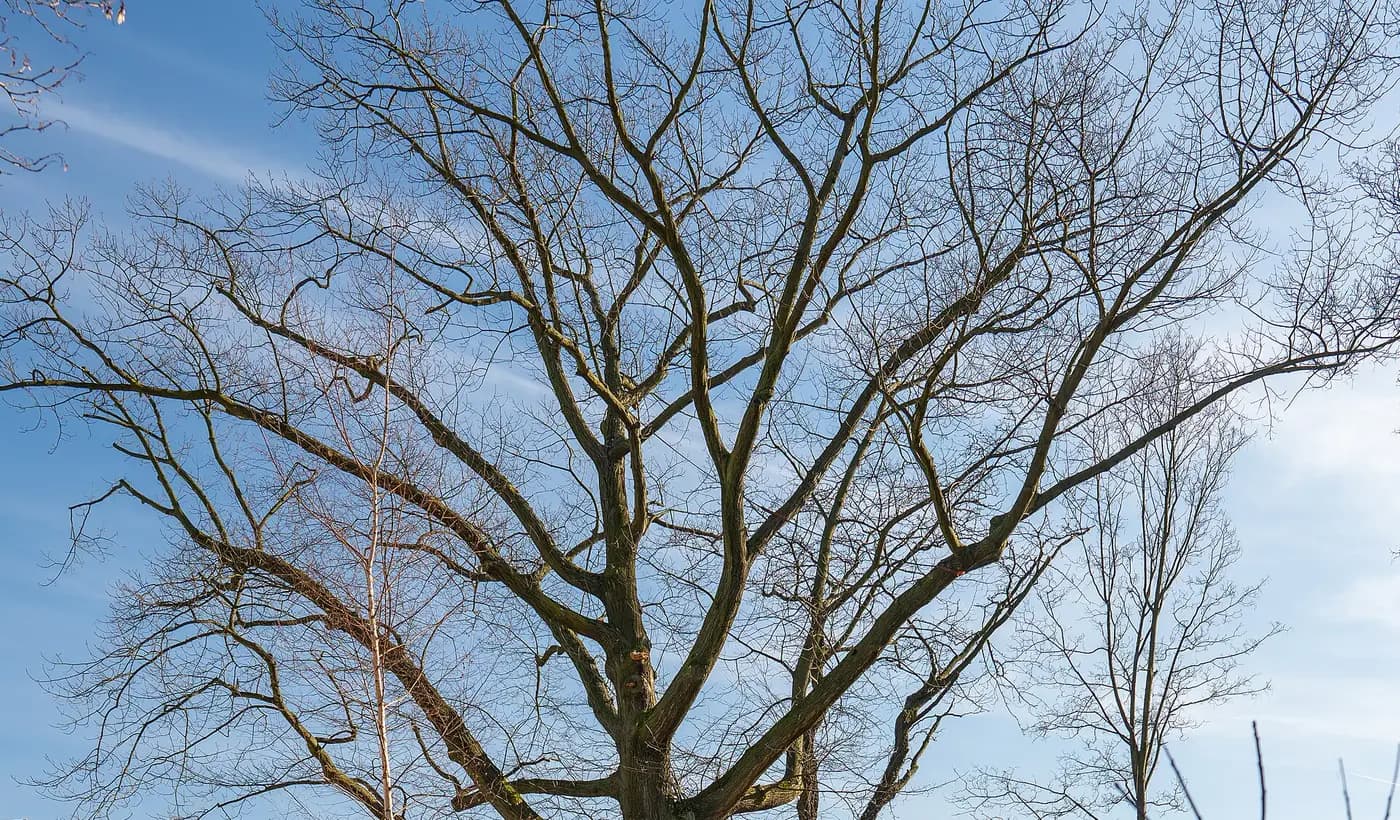
Oaks are some of the most valuable trees in Twin Cities yards. They are also the trees where timing matters most. Prune an oak in the wrong months and you can open the door to oak wilt, a disease that can kill a healthy red oak in one summer and spread to the oaks around it.
The good news is that the rule is simple, and fall is the start of the safe season.
The short answer: prune oaks in late fall and winter
The Minnesota DNR recommends that you do not prune or wound oaks from April through July. That is when the risk of spreading oak wilt is highest.
The safest time is when the tree is dormant, from about November through March. Cold weather keeps the beetles that spread the disease inactive, and there are no fresh spore mats for them to carry. Winter pruning also makes it easier to see the tree's structure with the leaves off.
How oak wilt spreads
Oak wilt is caused by a fungus that blocks the tree's water system. It spreads in two ways.
Above ground, small sap beetles pick up spores from infected trees and carry them to fresh cuts or wounds on healthy oaks. A single pruning cut in May can be enough.
Below ground, oaks of the same type often grow their roots together. Once one tree is infected, the fungus can move through those connected roots to the oaks next to it. This is why oak wilt often shows up as a growing pocket of dead oaks in a neighborhood.
If an oak gets wounded in spring or summer
Storms and construction do not wait for winter. If an oak is damaged between April and July, cover the wound right away with latex paint or a tree wound dressing. This is one of the few times arborists recommend covering a cut, because it keeps the beetles off the fresh wound.
If a broken limb is hanging over your house or driveway, do not wait for winter. Have it removed safely and have the cut covered the same day.
Signs of oak wilt to watch for
Red oaks, like northern red oak and northern pin oak, go downhill fast. Leaves wilt and turn bronze or brown from the tip and edges inward, starting near the top of the tree. The tree may drop leaves, some still partly green, in the middle of summer. Many red oaks die within weeks.
White and bur oaks usually decline more slowly, losing one branch at a time over several years.
If you see these signs, call an arborist quickly. The ISA Certified Arborists at A Tree Service can look at the tree, help confirm what is going on, and tell you plainly what it needs, including whether nearby oaks are at risk.
What to do with wood from an oak wilt tree
Wood from a red oak killed by oak wilt can grow fungus mats under the bark the next spring, and beetles can carry spores from those mats to healthy trees. Do not stack it as firewood near other oaks with the bark still on, and do not haul it to another property.
Chipping the wood, removing the bark, or having it taken away with the tree are all safer choices. When A Tree Service removes an infected oak, we handle the wood so it does not become a problem for the rest of your yard or your neighbors.
Oak pruning checklist
Plan oak pruning for November through March. Avoid pruning or wounding oaks from April through July. If a wound happens anyway, cover it right away. Watch red oaks for sudden summer leaf browning and drop. Keep wood from infected trees away from healthy oaks.
Not sure if your trees are oaks, or which kind? That is a fair question to ask at a free estimate.