
Fall is the best time to remove buckthorn in Minnesota. Buckthorn keeps its green leaves into November, long after most native trees and shrubs have dropped theirs, so it is easy to spot. Small plants can be pulled, and larger ones are cut down with the stumps treated right away so they do not sprout back.
Buckthorn is one of the most common invasive plants in Twin Cities yards and woods. Here is how to find it, how to get rid of it, and what to expect in the years after.
Why buckthorn is a problem
Common buckthorn and glossy buckthorn were brought to North America as hedge plants. They escaped and spread into woods, yards, and parks across Minnesota.
Buckthorn grows thick and fast, leafs out early in spring, and holds its leaves late into fall. That shades out wildflowers, native shrubs, and young trees, until a patch of woods turns into a wall of buckthorn and not much else. Its berries are eaten by birds, which spread the seeds far and wide.
Buckthorn is a restricted noxious weed
The Minnesota Department of Agriculture lists common and glossy buckthorn as restricted noxious weeds. That means it is illegal to sell them, import them, or move their living plants or seeds around the state.
The law does not make every homeowner remove buckthorn, but it does mean you should not transplant it, sell it, or haul berry-covered branches somewhere new. The Minnesota DNR encourages landowners to remove it.
How to spot buckthorn in the fall
Walk your property in late October or November. Once the maples, oaks, and most native shrubs are bare, buckthorn stands out as the shrub or small tree that is still green.
Other clues: the leaves are oval with fine teeth on the edges and curved veins. Common buckthorn often has a small thorn at the tip of its twigs. Female plants carry clusters of small black berries into fall and winter. If you scratch the bark, the inner layer is orange or yellow.
Pulling small buckthorn
Small seedlings and young plants can often be pulled out by hand when the soil is moist. For larger stems, a weed wrench or similar tool can pull out the whole plant, roots and all.
Try to get as much of the root as you can, and tamp the soil back down afterward. Disturbed soil gives buckthorn seeds a fresh place to sprout.
Cutting larger buckthorn and treating the stumps
Bigger buckthorn needs to be cut down. The catch is that a cut buckthorn stump sends up a bunch of new sprouts, so cutting alone usually makes the problem worse.
To stop that, most guidance from the Minnesota DNR and the University of Minnesota Extension calls for treating the fresh cut stump with an herbicide made for woody plants, right after cutting. Fall is the best time for this, because the plant is pulling energy down into its roots. Always read and follow the product label.
If you hire out the cutting, ask how the stumps will be handled so you are not left with a crop of new sprouts next spring.
Plan for regrowth
Even after a good cleanup, expect buckthorn to come back. Seeds already in the soil can keep sprouting for several years, and birds keep dropping new ones.
The fix is follow-up. Walk the area each fall and pull or treat new seedlings while they are small. Planting native shrubs, trees, or grasses in the cleared space also helps, because bare ground is exactly what buckthorn seeds are waiting for.
When buckthorn becomes a land clearing job
A few plants along the fence are a weekend project. A lot or a woodlot that has filled in with buckthorn and brush is different. Clearing that by hand can take weeks.
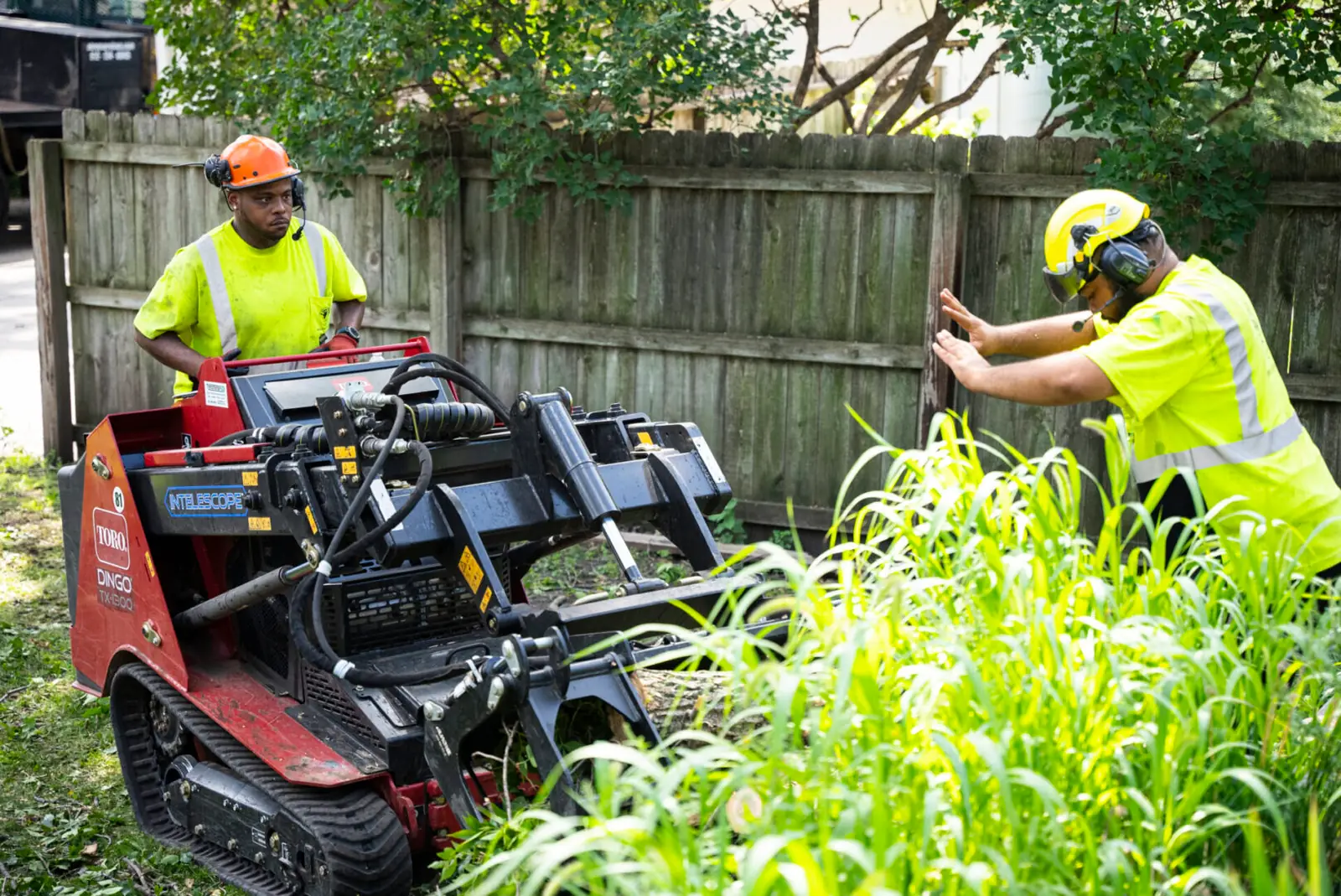
A Tree Service handles land and brush clearing across the Twin Cities with skid loaders, a log loader and grapple, and our crew. We can clear thick brush and unwanted trees so you can see what you have, and our ISA Certified Arborists can help point out the trees worth keeping.
Quick answers
When is the best time to remove buckthorn?
Fall, from about October into November. Buckthorn stays green after most native plants drop their leaves, so it is easy to find, and fall is a good time to treat cut stumps.
Is buckthorn illegal in Minnesota?
Common and glossy buckthorn are restricted noxious weeds in Minnesota. It is illegal to sell them or move their living plants or seeds. Homeowners are encouraged, but not required, to remove it.
Why does buckthorn grow back after I cut it?
A cut buckthorn stump sends up new sprouts unless it is treated right after cutting. Seeds already in the soil also keep sprouting for years, so plan on yearly follow-up.
Can I burn or compost buckthorn?
Check your city's rules before burning anything. Branches without berries can usually be chipped or taken to a yard waste site. Avoid moving branches with berries, since that spreads the seeds.
Who clears buckthorn and brush near New Brighton, MN?
A Tree Service Inc. in New Brighton, MN, clears overgrown brush and unwanted trees across the Twin Cities metro. Call for a free estimate.