
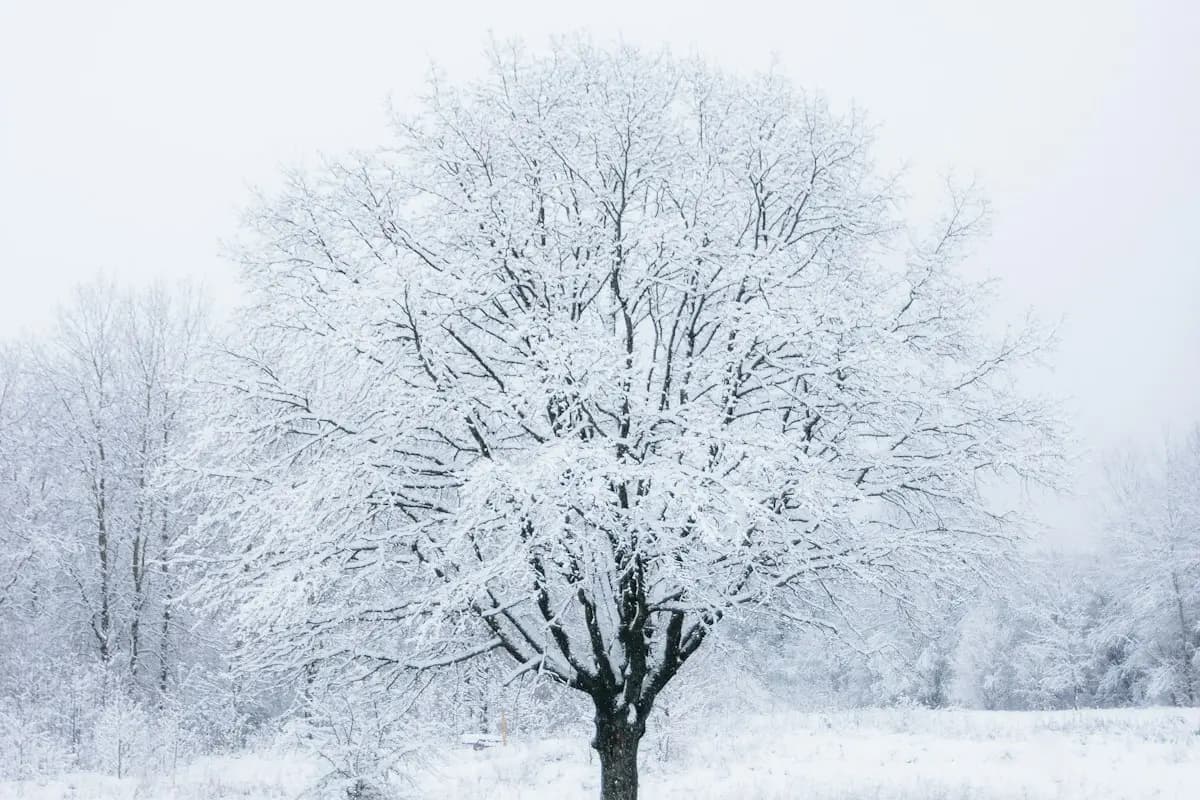
For most trees in Minnesota, the best time to trim is the dormant season, from late fall after the leaves drop through late winter, before new buds open. The tree is resting, pests and diseases are less active, and the wounds start to close quickly once spring growth begins.
There are a few important exceptions, like oaks, maples, birches, and flowering trees. Here is how to time your tree trimming, and which jobs should not wait for winter at all.
Why dormant pruning works so well
Once a tree drops its leaves in the fall, it slows way down for the winter. Trimming during this time is less stressful for the tree, because it is not putting energy into leaves and new shoots.
Cold weather also helps. Many of the insects and disease spores that can get into fresh cuts are inactive in winter. When spring comes, the tree starts growing again and begins sealing off the cuts right away.
And with the leaves gone, it is much easier to see what the tree needs. Dead limbs, crossing branches, weak joints, and cracks all stand out on a bare tree.
Is fall tree trimming OK?
Late fall is fine once the tree has dropped its leaves and gone dormant, which in the Twin Cities is usually by November. That is when the dormant season starts.
Early fall is a different story. Heavy pruning in late summer and early fall, while the tree is still active, can push out new growth that does not have time to harden before the cold. It is better to wait until the leaves are down.
Oaks: never trim April through July
Oaks have the strictest rule of all. The Minnesota DNR advises against pruning or wounding oaks from April through July, when beetles can carry oak wilt to fresh cuts. Oak wilt can kill a red oak in a single summer.
The safe time for oaks is the dormant season, from about November through March. We cover this in more detail in our article on when to prune oak trees in Minnesota.
Maples and birches may bleed sap, and that is OK
Maples, birches, and a few other trees often drip sap from cuts made in late winter, as the sap starts moving for spring. It can look alarming, but the University of Minnesota Extension notes that this bleeding does not hurt the tree.
If the dripping bothers you, these trees can also be trimmed in early summer, after the leaves have fully grown in. For birches, avoid late spring and summer cuts when bronze birch borers are active, and stick with the dormant season when you can.
Flowering trees: trim after they bloom
Trees and shrubs that bloom in spring set their flower buds the summer and fall before. If you trim them in winter, you cut off this year's flowers.
If the flowers matter to you, trim spring bloomers like lilacs soon after the blossoms fade. If you are pruning mainly for health or structure, the dormant season still works. You just give up some blooms for a year.
Dead and dangerous limbs can come off any time
The timing rules are about healthy, living wood. A dead branch, a broken limb hanging in the canopy, or a cracked limb over your roof or driveway should not wait for the right season. Those can come down at any time of year.
The one extra step is with oaks. If an oak has to be cut between April and July, cover the wound right away with latex paint or a tree wound dressing to keep the beetles away.
Planning your winter trimming
Fall is a good time to walk your yard, note which trees need work, and get on a tree service's schedule for the dormant season. Look for dead wood, branches rubbing on the house or roof, and limbs hanging low over the driveway or sidewalk.
Leave the big stuff to a pro. Anything above shoulder height, bigger than a few inches across, or near a power line is a job for a trained crew. The ISA Certified Arborists at A Tree Service do much of their trimming in the dormant season and can tell you what each tree in your yard needs.
Quick answers
What is the best month to trim trees in Minnesota?
For most trees, any time in the dormant season, from about November through March. Late winter is a favorite with many arborists because the cuts start closing soon after, once spring growth begins.
Is it bad to trim trees in the fall?
Late fall, after the leaves drop, is fine. Avoid heavy trimming in late summer and early fall, when the tree is still active and new growth may not harden off before winter.
Why is my maple dripping sap after pruning?
Maples move a lot of sap in late winter and early spring, so fresh cuts often drip. It looks worse than it is. The bleeding does not harm the tree and stops on its own.
Can I trim a tree in the summer?
Light trimming and removing dead or broken limbs is fine in summer for most trees. The big exception is oaks, which should not be pruned or wounded from April through July because of oak wilt.
Who trims trees in the winter near New Brighton, MN?
A Tree Service Inc. in New Brighton, MN, trims and prunes trees through the dormant season across the Twin Cities metro. Our ISA Certified Arborists offer free estimates.